Every Price Must Do Three Jobs
andrew @ anti/corporate
July 15, 2026
668 words · 3 minutes
Most owners set a price by staring at a competitor’s website and picking a number that feels close. That single guess quietly fails at least one of the three jobs a price is supposed to do. A working local business pricing strategy asks a price to cover your costs, reflect the value of what you offer, and move the business toward your financial goals. Copy a number off someone else’s menu and you have no idea which of those three it’s actually doing.
Price matters more than owners often want to admit. In our research, 43.7% of consumers name higher prices as the main reason they don’t shop local more often, ahead of convenience, selection, or hours.¹ That is the single biggest stated barrier. It is also not a reason to race to the bottom, because the same shoppers will pay when the price feels earned.
Why covering costs isn’t enough
Covering costs is the floor, not the target. A number that keeps you out of the red tells you nothing about whether it reflects your value or funds where you’re headed, and that gap is exactly how a busy business stays broke.
Here is the mechanic behind “busy but not profitable.” Your price has to cover the cost of goods sold (COGS), the direct cost of what you sell, plus a share of your fixed and variable costs, rent, insurance, marketing, and then leave a profit on top. When a price only clears COGS, every sale technically makes money and the business still bleeds, because rent and the rest never got paid for.
Cost-based pricing sets a floor you must clear. It says nothing about the ceiling. The ceiling is set by value, by what your offer is actually worth to the customer.
About three in ten consumers, 28.9%, tell us they choose local for better overall value for quality.¹ They are not choosing cheap. They are choosing worth. A price that only covers costs leaves that willingness on the table and quietly hands it to whoever prices with more nerve.
How to run the three-objective test on a price you already charge
Take a price you already charge and run it through three plain questions. If it answers no to any one of them, that price needs revisiting.
Does it clear costs? Add up COGS, your slice of fixed costs, and your slice of variable costs, including your own time. If the price doesn’t cover all of that with profit left over, it fails here first. Nothing else matters until this is a yes.
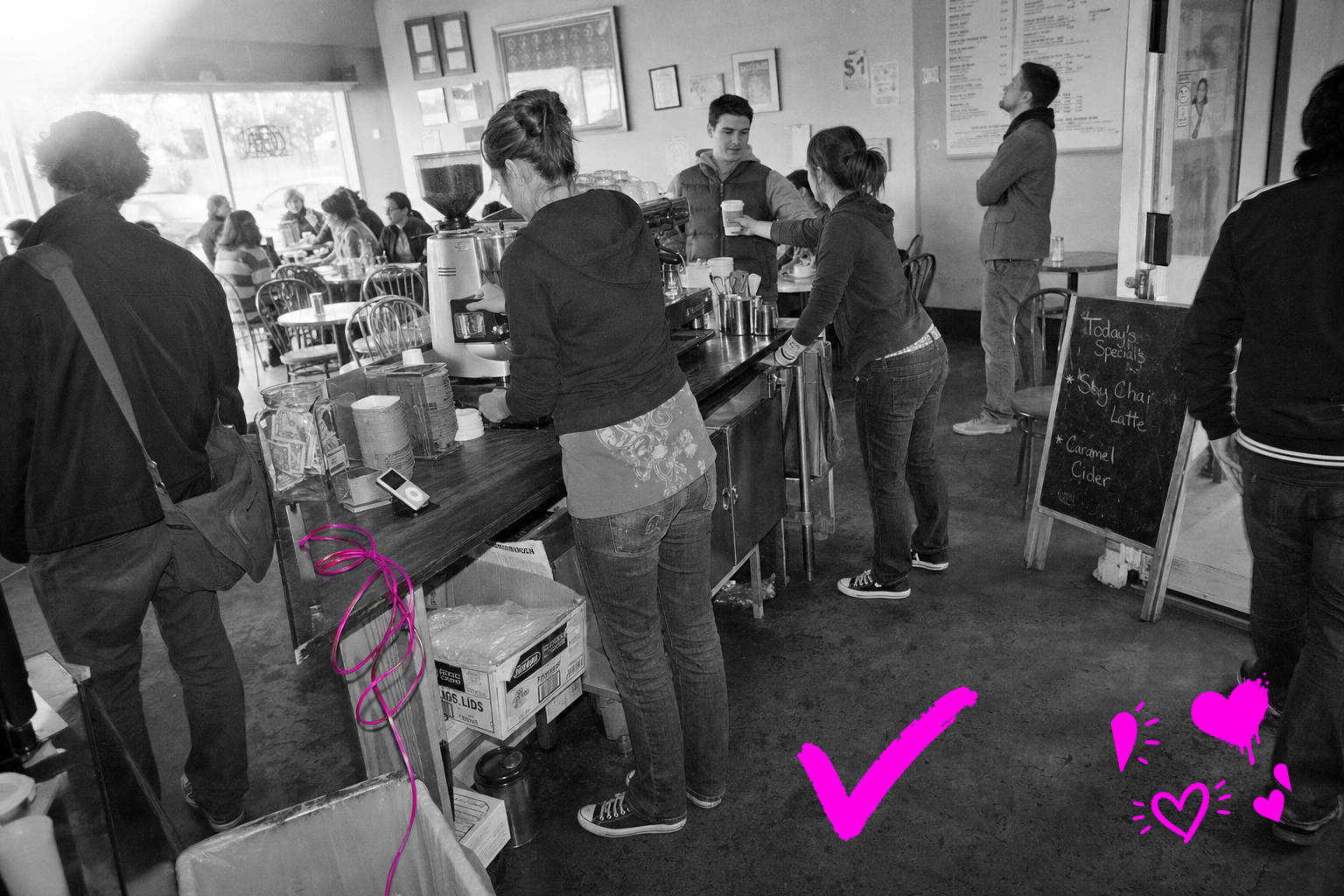
Does it match what the offer is worth? This is value-based pricing, setting the price by what the customer believes it’s worth, not what it costs you to make. The boutique coffee shop charges more than the gas station for the same beans because the room, the staff, and the care are part of what people buy. Ask yourself: would my customer still say yes if this cost a little more? If yes, you have pricing power you’re not using.
Does it fund where the business is headed? A price has to support the goals you actually have, hiring, a second location, paying yourself a real wage. If today’s prices can’t fund tomorrow’s plan, they aren’t wrong by accident, they’re wrong by design, and no amount of volume fixes a number set too low.
A price can pass the first test and fail the other two. That is the trap. Clearing costs feels like winning right up until you realize you built a job, not a business.
The anti/corporate point of view
Pricing is a decision you owe real thought to, not a reflex copied from whoever is loudest in your market. A national chain prices on scale and volume math you can’t match and shouldn’t try to. Your advantage is that you can price on value, on the personal service and care behind the counter that they can’t deliver.
Run the test on your prices this week. Fix the ones that answer no.
Sources:
¹ anti/corporate pro local. 2026; online survey, n=1,100 U.S. adults